You’re in goal during the evening training session. The floodlights are already on, even though it’s only just after six. Your hands are cold, the ball is heavy from the rain, and as you jump, you realise for the first time this season: the ground isn’t giving way as much as it did in August. It’s at this very moment that it becomes clear whether you’ve really prepared for the autumn, or whether you’re simply carrying on training as you did in the summer and hoping that it’ll be enough.
In summer, warm weather masks many minor oversights. A glove that slips in wet conditions is hardly noticeable on dry grass. A jersey without weather protection isn’t a problem as long as the sun is shining.
Autumn, however, lays all that bare. Less light, falling temperatures, more rain, wet ground: four changes that affect both your training and your kit at the same time. If you don’t adapt your setup, you won’t lose out on just one front, but on all four at once.
Here’s what matters most right now.
From the end of September, training shifts to twilight. What was still light at 6 pm in July is already grey by October. For you, this means: reduced reaction time due to poorer visibility, and a training plan that has to adapt to the light conditions rather than the other way round.
Where possible, schedule goalkeeper-specific reaction drills during the brighter periods of the day. And get used to the fact early on that balls arrive differently under floodlights or in twilight than they do in daylight.
Falling temperatures
Cold muscles react more slowly. That’s exactly what you can least afford during goalkeeping training. The solution isn’t more clothing, but the right clothing.
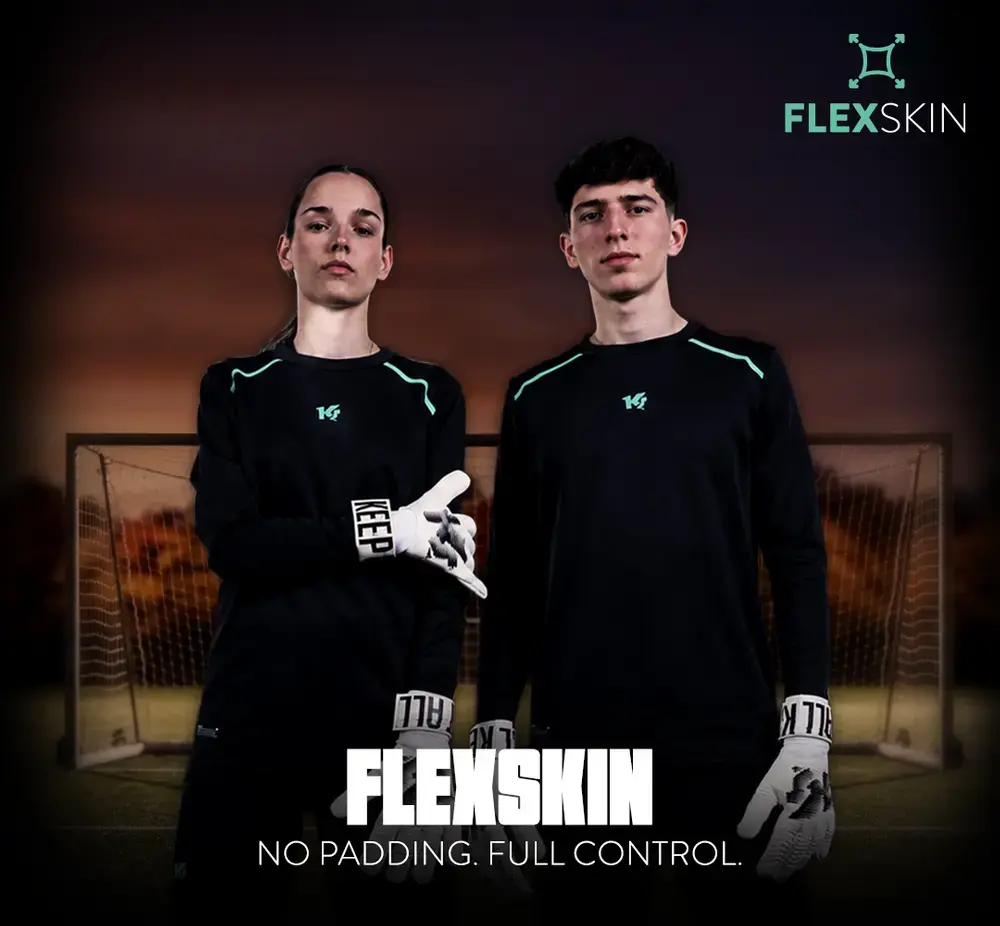
The KEEPERsport FlexSkin range is designed precisely for this transition. The GK Top and GK Pants FlexSkin fit snugly against the body, keep you warm without trapping heat, and remain flexible enough to ensure your diving technique and jumping power aren’t compromised. Worn as a base layer under your jersey, it keeps your muscles at the right temperature without making you feel weighed down when you jump.
Why it works: A cold muscle takes longer to generate maximum power. FlexSkin keeps your core temperature stable, particularly during those minutes of training when you’re standing still between drills rather than moving.
Frequent rain
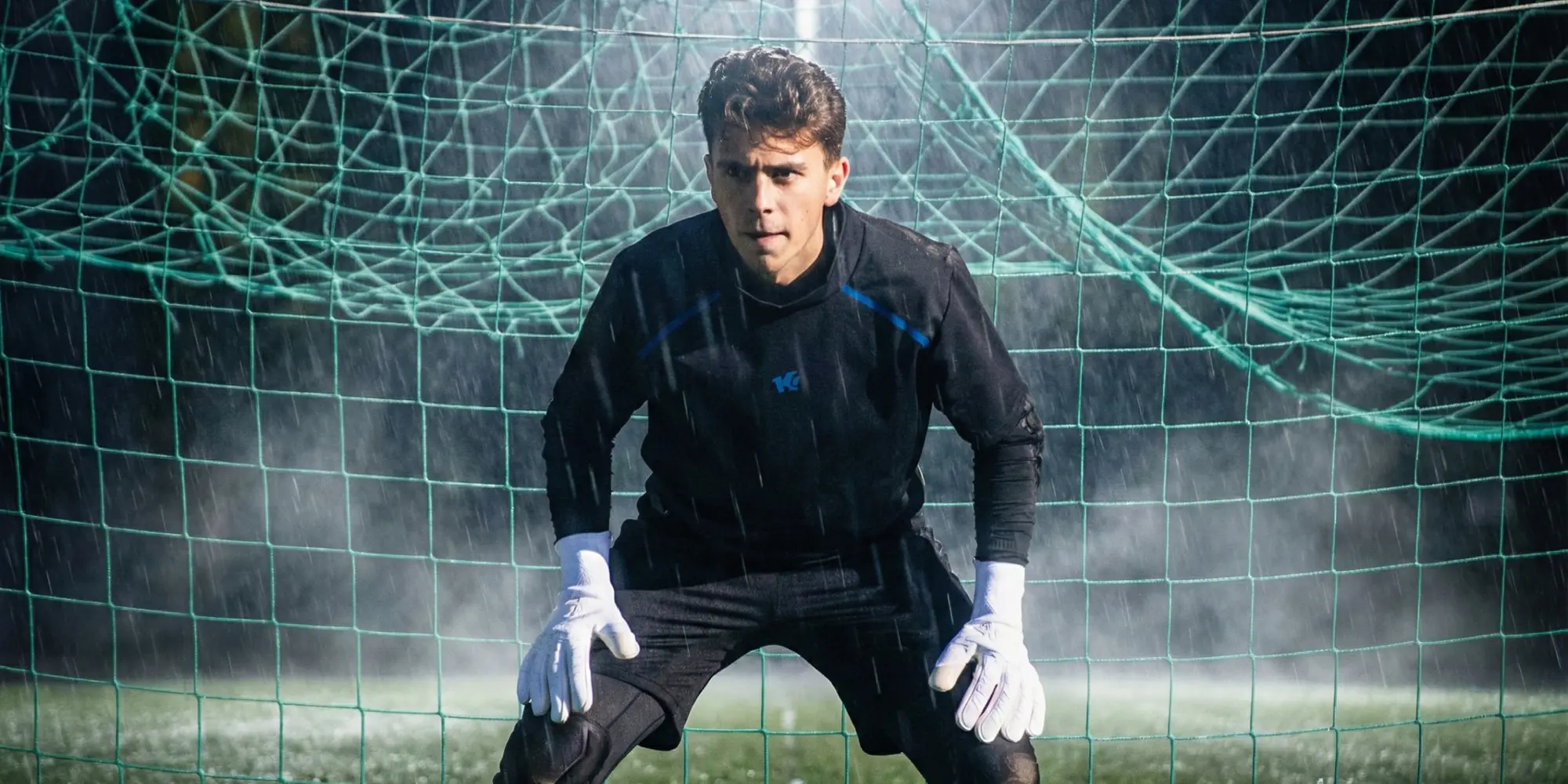
Rain doesn’t just affect the ground. It also changes how your top feels, how heavy the ball becomes, and how quickly you start to feel the cold as soon as you stop moving for a moment.
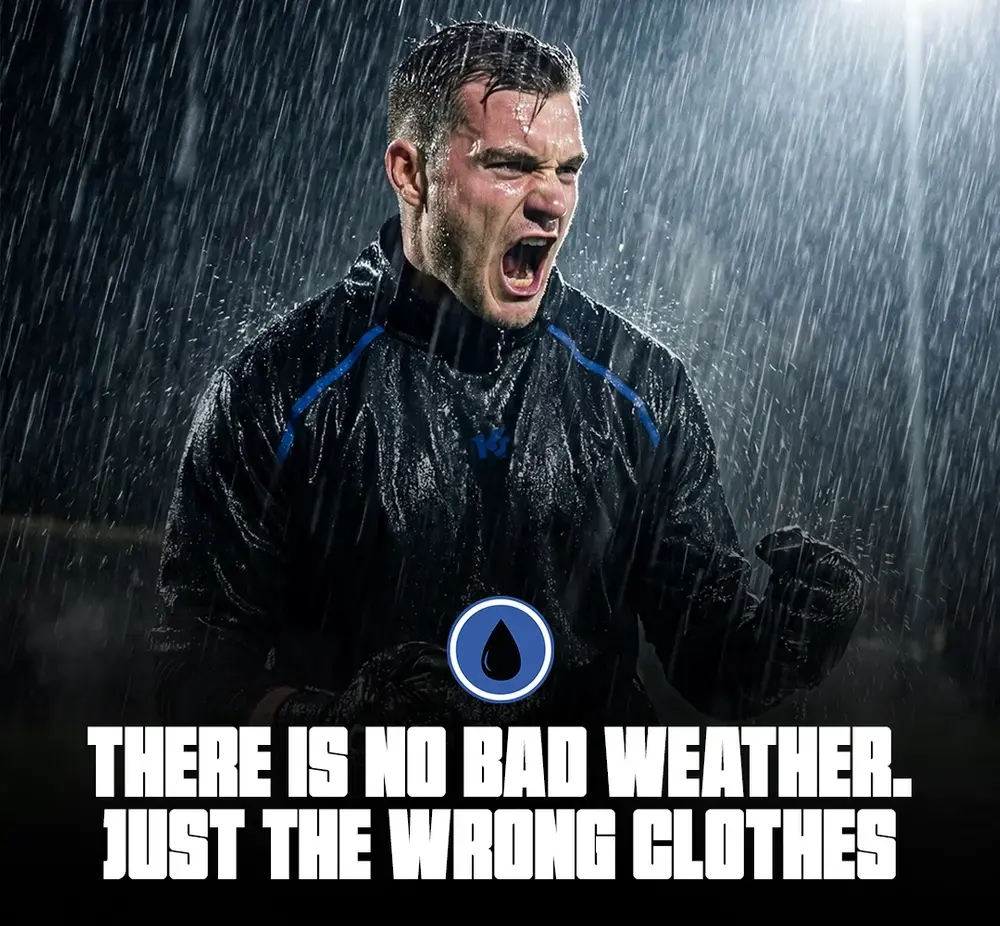
The KEEPERsport RainSkin range (GK Top RainSkin, also available as a short-sleeved version, RainSkin s/s, both also available for kids) is designed precisely for this scenario: weather-resistant, yet breathable enough to prevent you from getting wet from the inside whilst exercising. The difference compared to a normal rain jacket: RainSkin is made for movement, not for the walk to the car.
Why it works: If you get chilled in the rain, you lose both mobility and concentration at the same time. RainSkin keeps you dry enough to focus on the ball rather than the dampness down your neck.
If you regularly play in the rain during autumn, you won’t need to replace your gloves every time. Some KEEPERsport models feature a 4mm Aqua-Claw latex blend on the palm, specially developed for wet surfaces. The difference compared to a standard glove with Aqua Glue is that the material itself is designed for wet conditions, rather than simply being treated for them.
For goalkeepers who regularly play in the rain during autumn and winter, an Aqua glove is the more consistent solution. For everyone else, Aqua Glue remains the flexible option for upgrading any glove as and when needed.
Why it works: Latex with a high water-absorption capacity loses less grip on wet days than standard latex. So you no longer need to prepare for a single downpour – the glove is built for it from the ground up.
Wet, soft grass is the biggest factor to consider in autumn – and the most underrated. Without the right stud configuration, you’ll slip at precisely the moments when you need to be at your most explosive: when breaking away, during the split step, and when pushing off to the side.
SG (Soft Ground) shoes are designed for this surface. Longer, usually replaceable studs dig deeper into soft, wet grass and give you the grip that an FG or AG shoe offers on dry surfaces, but which it no longer provides on damp ground.
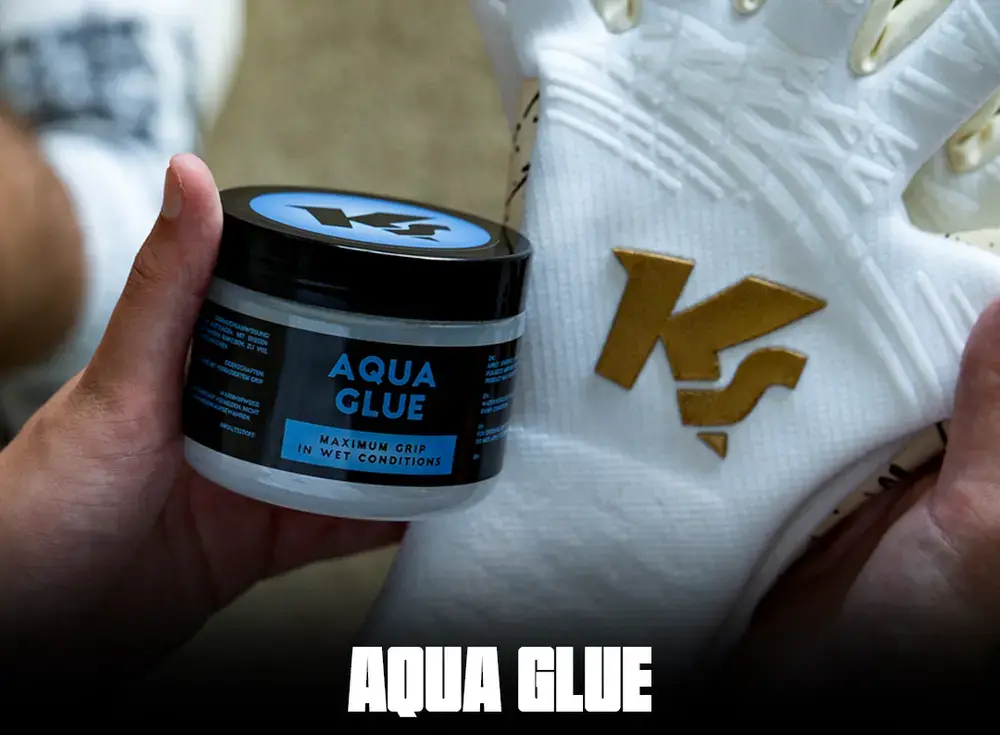
KEEPERsport Aqua Glue
And because wet turf doesn’t just affect your feet: when your gloves are damp, your grip starts to slip before you even realise it. KEEPERsport Aqua Glue is designed specifically to tackle this problem and maintains a firm grip on the palm, even when the ball and gloves are completely wet. Applied just before the match or at half-time, it ensures grip remains exactly where it’s most easily lost in autumn.
Why it works: Grip starts at the ground and ends in the hand. If you only adjust your boots but let your gloves get soaked in the rain, you’ve only solved half the problem.
Too late to make the switch: if you only react after the first cold weekend, you’ve already lost out on training quality. The switch should be made at the start of autumn, not halfway through.
Only the boots are adapted: soft-ground studs without the right grip on the gloves only solve half the problem of slipping.
Wearing too many clothes instead of the right ones: several layers of ordinary cotton T-shirts provide poor insulation and become heavy when it rains. A functional layer such as FlexSkin or RainSkin replaces three unsuitable ones.
Training times not adjusted: Anyone who’s still planning their November training as if it were August often ends up training in the dark without realising it.
Your autumn checklist
✅ Adjust training times to the shorter days; schedule
reaction drills during daylight hours where possible ✅ Include
FlexSkin as a base layer to combat falling temperatures ✅ Keep RainSkin to hand for sessions and matches in the rain; switch
to gloves with Aqua-Latex if used regularly in the rain ✅ Switch to SG boots as soon as the pitch becomes
consistently soft ✅ Keep Aqua Glue to hand in case you’re not using Aqua gloves
Summer training and autumn training are two different challenges. Light, temperature, wetness and surface conditions all change at the same time, and your kit needs to keep up, not lag behind.
If you make the switch now, you won’t compromise the quality of your training in the autumn. If you wait, you’ll feel the difference the first time it rains and gets cold, and by then it will be too late to make any changes.
When should I start wearing SG boots?
As soon as the pitch remains soft all the time, not just when it’s visibly muddy. A good tip: if your FG boots regularly slip when you push off, it’s time for longer studs.
Can I use FlexSkin and RainSkin together?
Yes. Wearing FlexSkin as a close-fitting base layer underneath and RainSkin as a weatherproof layer on top is exactly the right approach for cold and wet conditions at the same time.
Is an Aqua Glove worth it, or is Aqua Glue enough?
It depends on how often you play. If you only play occasionally in the rain, Aqua Glue will do the job on any glove. If you play regularly in the rain throughout the autumn and winter, an Aqua-Latex glove will save you the hassle of constantly reapplying it.
How often do I need to apply Aqua Glue?
In consistently wet conditions, one application before training or a match is usually sufficient. For very long sessions in continuous rain, it is worth applying a second coat during the break.
Is a normal long-sleeved T-shirt enough instead of RainSkin?
In the short term, yes; in the long term, no. Cotton becomes heavy when it rains and makes you feel cold. RainSkin remains light and continues to keep you warm even when wet.