93rd minute: 1–1.
The referee points to the spot. Eleven metres. It’s you against the taker. Twenty thousand in the stadium. And one simple question: where will the ball go?
The truth is uncomfortable: statistically, a professional-level goalkeeper saves about one in five penalties. That sounds sobering, until you understand what the keepers who are better than average do. They don’t guess. They work.
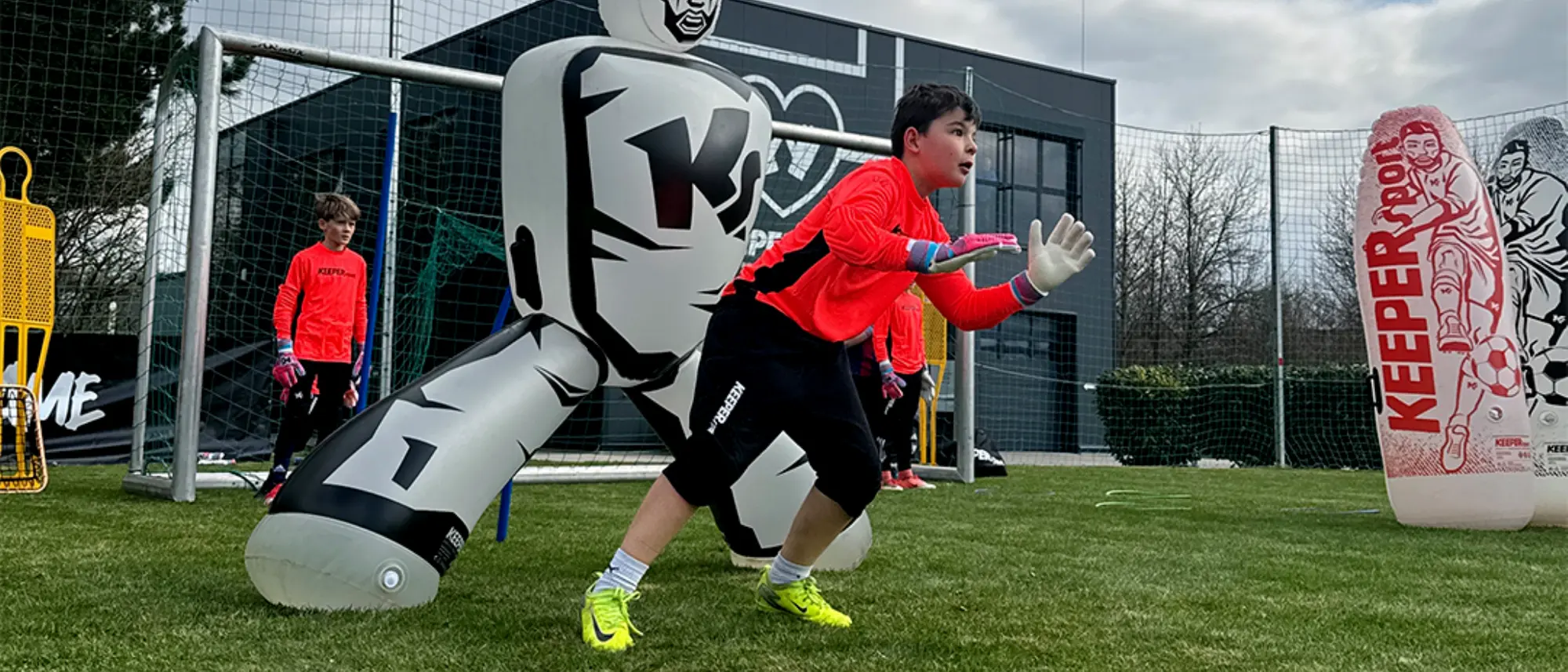
Why most penalty tips are useless
"Dive early." "Read the body language." "Stay in the middle." You know this advice. It’s not wrong, but it lacks the crucial context: without a system, you’re relying on luck.
A penalty kick isn’t a duel between the goalkeeper and the penalty area. It’s an information problem. The taker has made a decision – or hasn’t yet. Your job is to gather as many clues as possible before you act.
The three stages that determine whether to hold or sell
1. Before the penalty: Preparation
This is where you gain time before the ball is even on the spot.
Know your taker. At professional level, there’s scouting data. At amateur level: watch him in the game. Does he always shoot into his favoured corner? Does he have a run-up he never changes? This information is worth its weight in gold.
Take your time. You get to dictate the pace. Walk slowly towards the goal. Get into position. Every second you give the taker is a second in which their mind is working.
Disrupt the routine, not the concentration. Little tricks: shift position slightly in goal, position yourself late on the line, glance briefly at the shooter. Don’t overdo it, don’t be theatrical. Small psychological jabs are enough.
2. During the run-up: Reading
This is the crux of every penalty save. And this is where most goalkeepers make their biggest mistake: they look at the ball instead of the taker.
What you should really be watching:
- Run-up angle: A steep, straight run-up often indicates the strong corner. A taker running in diagonally from the left frequently shoots to the bottom
right. - Plant foot: Look where the plant foot lands. Close to the ball and parallel to the goal line? Often a shot down the middle or to the near post. Far from the ball? More likely to be the far corner.
- Shoulder rotation: The body turns in the direction of the shot just before the shot is taken. This signal comes earlier than the foot.
- Eye movement: Many shooters glance briefly at the corner they intend to shoot towards before they run up. Even if it’s only for half a second.
Why it works: The human body cannot completely hide its intention to shoot. These micro-signals occur unconsciously. You can learn to read them, but only if you train yourself to spot them.
3. The jump: Timing
Here’s the uncomfortable truth: if you jump too early, any shooter at the shooting range will hit the open corner. If you jump too late, you won’t make it.
The optimal timing is just before ball contact, not after.
Split step: A small bounce on your toes just before the shot keeps your body engaged and significantly shortens your reaction time. Without a split step, your body is at rest, which costs you precious milliseconds.
Mid-height centre as a baseline: If you haven’t gathered any information from the run-up, the statistically most common save zone is mid-height in the centre or slightly to one side. Many shooters avoid the corner if the goalkeeper is standing ‘still’.
3 training drills for better penalty saves
Drill 1: Recognising the angle of approach
Set-up: Three shooters with three different run-up paths. The goalkeeper watches only the run-up, not the ball.
Procedure: Immediate feedback after the shot: “Did you read the approach angle before you made your decision?” The aim is to make the decision before the shot.
Why it works: You actively train yourself to read information rather than passively reacting to the ball.
Drill 2: Delayed jump
Setup: Standard penalty, but with the rule: you may only jump once the shot has been taken.
Sounds paradoxical, but it serves a purpose: you learn to read the direction of the shot from the shooter’s body, not from the ball. Anyone who trains this for weeks will automatically jump earlier and more accurately in a match.
Drill 3: Data training
Setup: Before every training match or session involving penalties, write down what you know or observe about each taker. After the shot: Was I right?
Why it works: You are actively building up an internal database. During the match, you recall patterns, not memories.
The psychological aspect: if you crack under pressure, you’ve already lost before you take the shot
Penalties are decided in the mind, for the taker just as much as for the goalkeeper.
Your aim isn’t to eliminate the pressure. You can transfer it to the taker. If you appear calm, upright and composed, his burden grows. If you appear nervous, he’ll sense it.
In practical terms: breathe out before you step onto the line. Stand upright. Maintain eye contact without aggression. No fidgeting, no clowning around. A calm presence is the strongest psychological tool you have.
And if he saves it? No drama. Back into the game. That calm after the save is often worth more than the save itself.
Conclusion: Penalties are not a matter of chance
A goalkeeper who saves more often than average doesn’t give better advice. He prepares better. He takes in more information. He trains in a targeted way.
You won’t save every penalty. But you can systematically improve your chances, every week, every training session, every penalty.
That is the difference between a goalkeeper who hopes and a goalkeeper who works.
Always stay up to date
Read more:
- Ready when it counts – How to prepare optimally for
your next match- Intercepting crosses with confidence – Technique, timing and drills for the modern goalkeeper-
Improving your reaction time – How to train like a pro