TRAINING LATEX
Ideal for children up to 12 years old. Sturdy, durable, affordable replacement.
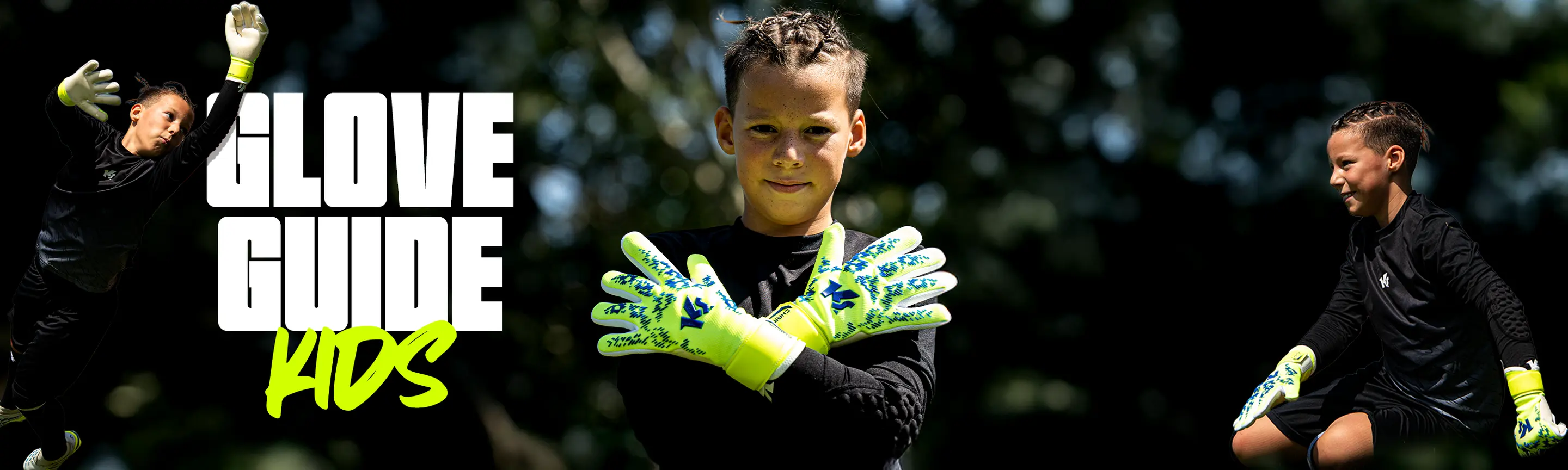
Reusch · Uhlsport · adidas · Puma · KEEPERsport
Goalkeeper gloves for children should be chosen based on age, hand size and playing ability. A glove that’s too big reduces ball control, whilst one that’s too small restricts blood circulation. With the right size and the right latex, even an 8-year-old goalkeeper will make better saves and have more fun.
This guide explains everything parents need to know: how to measure a child’s hand, which size is suitable for each age group, when ‘Fingersave’ becomes a good option, and which models are genuinely recommended.
✅ The right size is more important than the price
✅ Fingersave is only recommended from 10–12 years
of age ✅ Applies to all brands: Reusch, Uhlsport, adidas, Puma and KEEPERsport
There is no minimum age for playing in goal. Children usually start specialising in this position between the ages of 6 and 8. For children under 6, there is little point in investing in technical gloves; a simple training pair will suffice. From the age of 10, children start to develop their own playing style, and it’s worth investing in a high-quality pair of gloves.
As well as size and price, there is a key difference in the rubber: for children, a thinner, 2 mm-thick rubber is deliberately sufficient. This is not a budget option, but a deliberate choice. Less grip forces the child to use a clean catching technique, as they have to concentrate more on their hand position rather than relying on the ‘sticky’ effect of the latex.
The fastening is also designed differently. Children’s goalkeeper gloves always feature a full or half-wrap fastening instead of laces. With the full-wrap fastening, the cuff is elasticated all the way round; with the half-wrap, it is only elasticated on the inside. The reason is practical: children should be able to put on and take off the gloves independently, without having to struggle with knots or Velcro fastenings.
Measure the circumference of the hand with a tape measure around the knuckles, excluding the thumb. Add 1 cm to this measurement to get the base size.
Size chart for children’s goalkeeper gloves by age
| Age | Hand circumference | Recommended size |
|---|---|---|
| 5 to 6 years | 13 to 14 cm | 3 |
| 7 to 8 years | 14 to 15 cm | 4 |
| 9 to 10 years | 15 to 16 cm | 5 |
| 11 to 12 years | 16 to 17 cm | 6 |
| 13 to 14 years | 17 to 18 cm | 7 |
| 15+ years | 18 to 19 cm | 8 to 9 |
Note: Sizes may vary slightly depending on the brand. Reusch fits slightly tighter, whilst Uhlsport fits slightly looser. If in doubt, choose the larger size.
Don’t buy goalkeeper gloves for children that are any larger than they currently need. A glove that’s too big won’t fit as well, reduces ball feel and, due to the lack of support, is more likely to wear out before the child has grown out of it. A good fit is better than allowing for growth.
From size 7 onwards, the range of models increases noticeably, and match gloves from this size upwards feature better padding than smaller sizes. This is also the point at which it’s worth having two separate pairs of gloves for training and matches, usually between the ages of 11 and 13.
A good fit is more important for young goalkeepers than the design, as it directly affects their feel for the ball. Three criteria:
✅ No ‘bulge’ in the palm: The glove lies flat against the hand, with no air between the latex and the skin
✅ A finger’s width of space at the fingertips
✅ Not too tight: A glove that’s too tight puts a lot of strain on the seam; in the worst case, it will tear
A glove that’s too tight is just as much of a problem as one that’s too big, just with a different consequence: it’s not ball control that’s lost, but the seam.
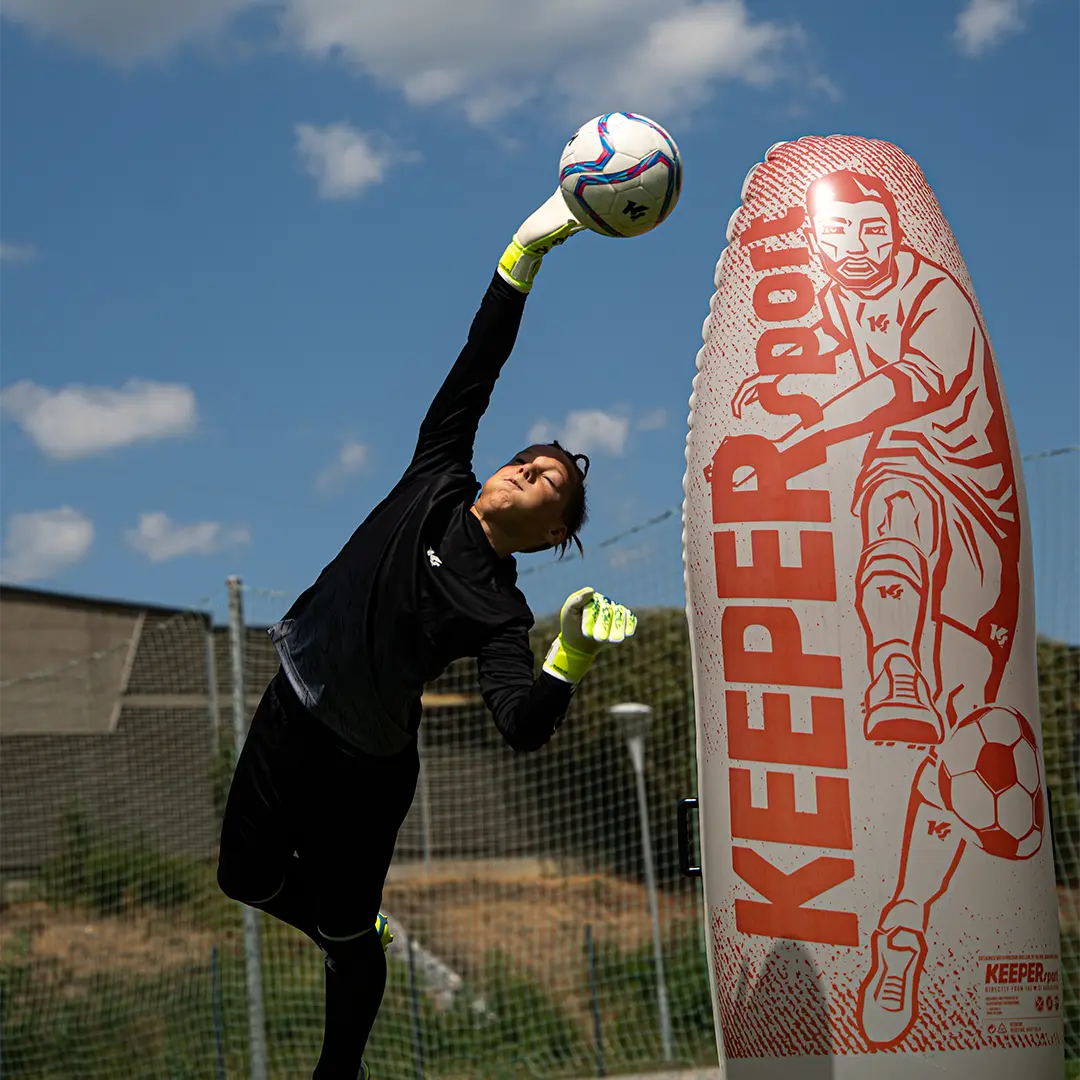
For children and young people up to the age of 14, we recommend hard training latex. It lasts considerably longer than soft match latex, can withstand rough handling and is better value for money – ideal for children who are still growing and train several times a week. Soft match latex is only really worth it for young players aged 14 to 15 and above.
As a rule of thumb: the more grip a latex offers, the shorter its lifespan. And vice versa. Particularly for younger children (under 10 years old), who usually use just one pair of gloves for both training and matches, durability is more important than maximum grip, which diminishes over time anyway. A glove glue helps to maintain the grip for longer.
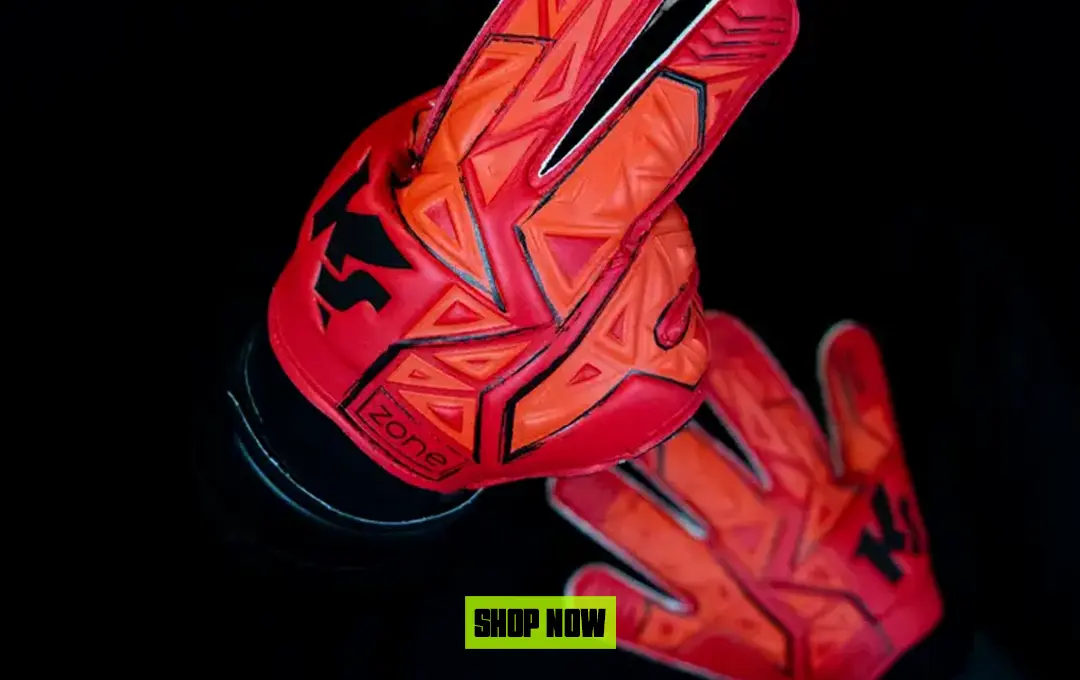
Ideal for children up to 12 years old. Sturdy, durable, affordable replacement.
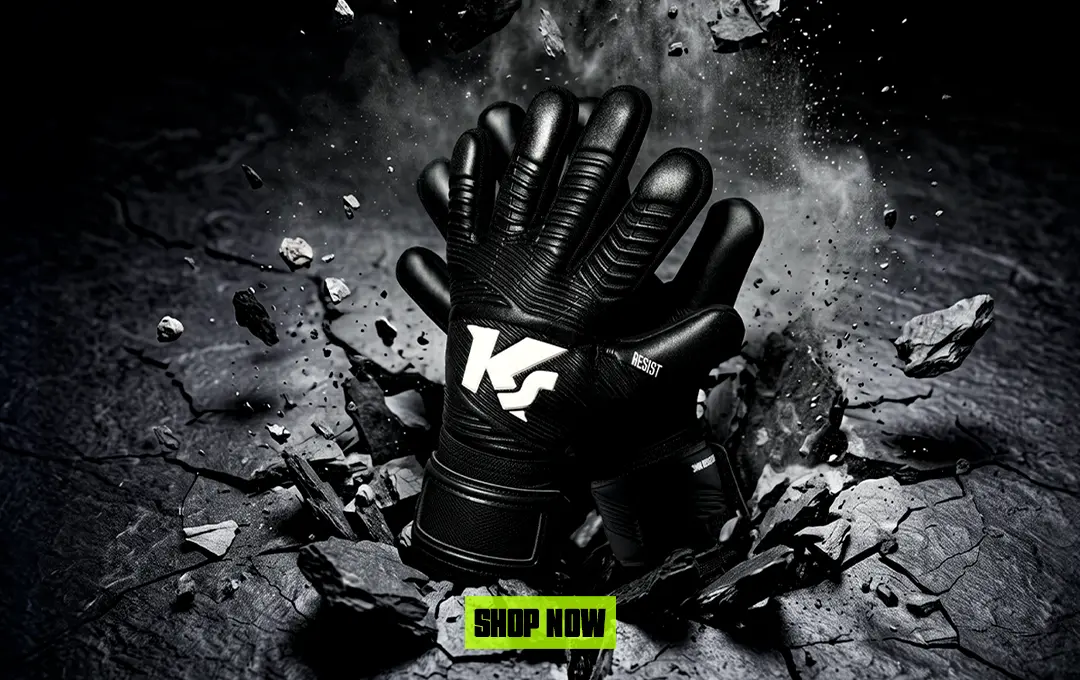
Ages 12 and over. A balance of grip and durability.
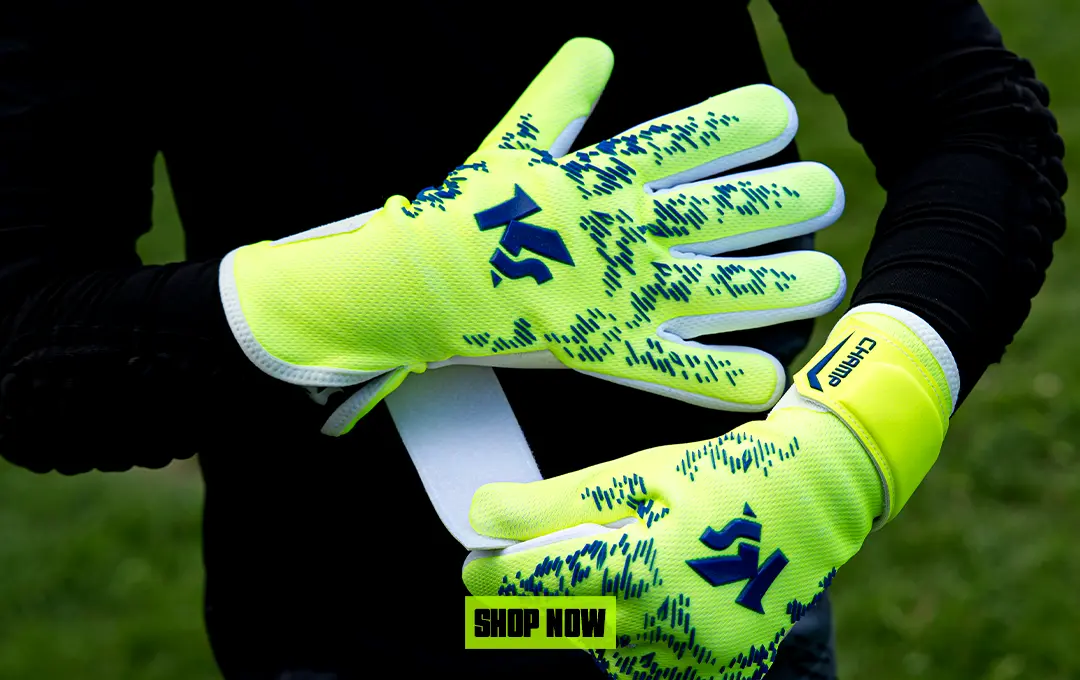
Ages 14–15 and over. Soft, maximum grip, wears down quickly.
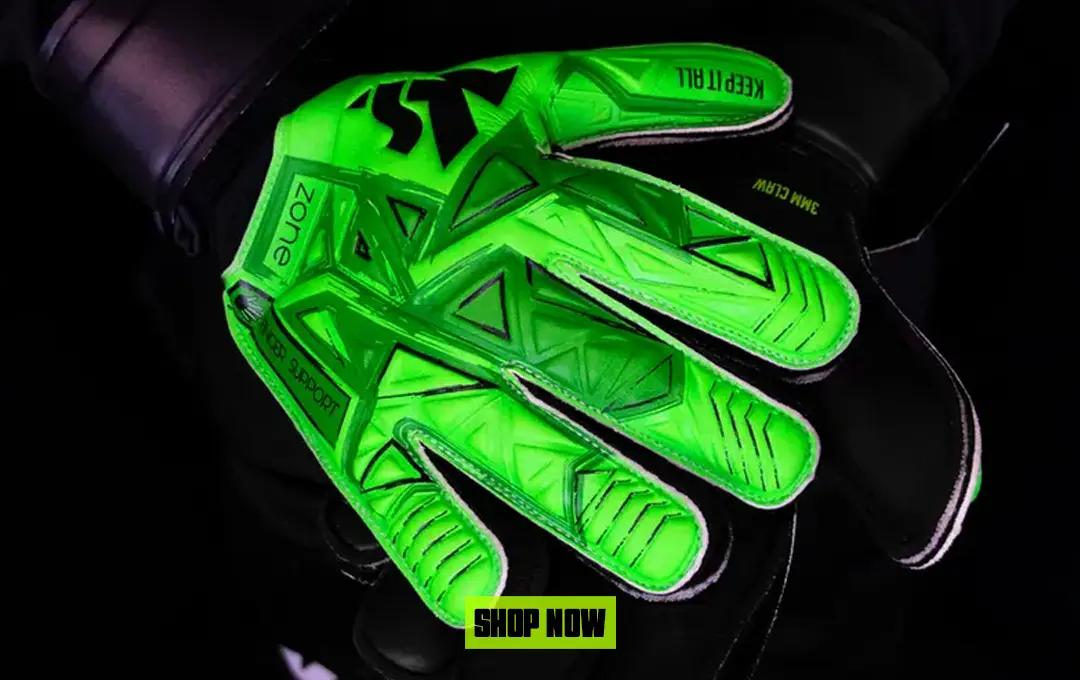
Ages 12 and over. Protection during intensive training and competition.
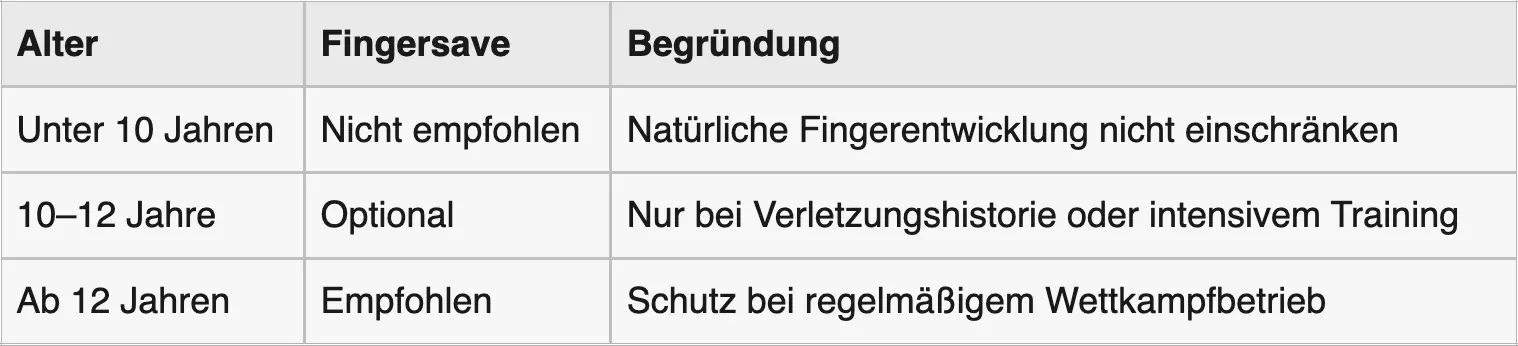
Fingersave gloves are not recommended for children under the age of 10 to 12. Their fingers are still developing; finger guards restrict natural movement and prevent the child from developing a genuine feel for the ball. The stiffer design also affects catching technique, which is still being practised at this age.
There are two further reasons against switching too early: once a child has got used to a Fingersave glove, it is difficult to get them used to gloves without finger protection again. And the range of children’s Fingersave gloves is smaller anyway than that of models without finger protection.
From the age of 12, during intensive training or following a finger injury, finger guards may be a sensible option. If safety is the clear priority, using a Fingersave glove is justifiable even at an earlier age.
The best children’s gloves combine durable latex, a secure fit and a fair price. Reusch, Uhlsport and KEEPERsport offer the most reliable models for young goalkeepers, tried and tested in practice and recommended by our experts.
1) For younger goalkeepers (size under 7, usually under 10 years old) Versatile models suitable for both training and matches are ideal: the KEEPERsport Champ Elite NC Kids, the Uhlsport Supersoft and the rehab Master CG2 NC. Durable latex, simple construction, no finger saver required.
2) For older children, training gloves (from size 7, from around 10 years old) Training and match gloves should have the same cut so that no adjustment is needed during a match. For an inside-seam cut: KEEPERsport Pro Rise NC, Champ Prime NC and rehab Master CG2 NC. For an outside-seam cut: Uhlsport Supersoft.
3) For older children, match gloves (from size 7, from approx. 10 years old) Best value for money: the KEEPERsport Champ Elite NC. Also recommended: Uhlsport Absolutgrip and Reusch Attrakt Fusion NC.
KEEPERsport offers specific models for every age group, from the first entry-level glove to competition models for youth players. The advantage: direct from the manufacturer, with no middleman mark-ups.
Apart from gloves, a young goalkeeper needs very little to get started:
✅ Goalkeeper gloves: the most important piece
of kit ✅ Goalkeeper shirt with shoulder and elbow padding
✅ Shorts with built-in knee pads
✅ Grip socks, optional but recommended from youth level onwards
Children grow quickly, so check the size every 6 months. If your fingers touch the fingertips of the glove or the latex shows deep tears in the palm, it’s time for a new pair. Don’t wait until the glove is completely worn out; a poorly fitting glove increases the risk of injury to your fingers.
The most common questions from parents, answered directly and without beating about the bush.
There is no minimum age. Most children start between the ages of 6 and 8. For children under 6, a simple training model is sufficient. From the age of 10, it’s worth investing in a high-quality glove.
Measure the circumference of the hand with a tape measure around the knuckles, excluding the thumb. Add 1 cm to ensure the correct size. Don’t buy a size larger than is currently needed; a glove that’s too big won’t fit properly and is more likely to wear out before the child outgrows it.
Not for children under 10 to 12 years of age. Their fingers are still developing, and Fingersave restricts their natural range of movement. From the age of 12, particularly during intensive competitive play, they offer useful protection.
Hard training latex for children aged 12 to 13, often with a thinner 2-mm surface layer, which is specifically designed to improve catching technique. Greater durability, lower cost, ideal for training several times a week. Soft match latex wears out too quickly for children.
So that the child can put the glove on and take it off by themselves. The full-wrap version has an elasticated opening all the way round, whilst the half-wrap version is elasticated only on the inside.
After each use. A quick rinse under lukewarm water is sufficient for basic care. Latex deteriorates when exposed to dirt and sweat, even in children’s gloves.
No. Children’s sizes start at size 3, whilst adult models start at sizes 6 to 7. A glove that is too big reduces ball control and increases the risk of injury.
When the fingers touch the fingertips, the latex shows deep cracks, or the grip no longer works despite regular care. For fast-growing children, check the size every 6 months.
Author: Simon Harrasser — professional goalkeeper and product expert at KEEPERsport. Simon knows from personal experience what young goalkeepers really need — what size fits, which latex offers the best grip, and when it makes sense to switch to your first pair of finger-save gloves.